Tuesday, July 5, 2011

Techniques to boost your brain power


Ways to Better Brainpower - 
(In no particular order.)

1. Breath deep. More air in means more oxygen in the blood and therefore in the brain. Breath through your nose and you'll notice that you use your diaphragm more, drawing air deeper into your lungs. Several deep breaths can also help to relax you, which is conducive to clearer thinking.

2. Meditate. A simple meditation you can do right now is just closing your eyes and paying attention to your breath. Tensing up your muscles and then relaxing them to start may help. When your mind wanders, just bring your attention back to your breath. Five or ten minutes of this will usually relax you, clear your mind, and leave you more ready for any mental task.

3. Sit up straight. Posture affects your thinking process. Prove it to yourself by doing math in your head while slouching, looking at the floor and letting your mouth hang open. Then do the mental math while sitting up straight, keeping your mouth closed and looking forward or slightly upwards. You'll notice that it's easier to think with the latter posture.

4. Phosphotidyl Serine (PS). This supplement has been shown in clinical studies to increase lucidity and rate of learning. It activates cell-to-cell communication, helps regulate cell growth, improves the functioning of the special receptors found on cells, and prepares cells for activity. In other words, it can help your brain power. It's also thought to reverse memory decline. Phosphatidylserine has no known adverse side effects.

5.Vinpocetine. This extract, derived from an alkaloid found in the Periwinkle plant, is used as a cerebral vasodilator. It increases blood flow to the brain, which improves its oxygenation and thereby increases mental alertness and acuity. Research suggests it may also be the most powerful memory enhancer available to date.

6. Gingko Biloba. The leaves of this tree have been proven to increase blood flow to the brain. The trees are often planted in parks. My friends and I used to eat a few leaves when we wanted a brain boost. It is also inexpensive, if you buy the capsules or tea at any health food store.

7. Saint John's Wort. This is a common weed that may be growing in your yard. Although it's brain enhancing qualities are less documented (studies do show it's usefulness for treating long-term depression), many people swear by it's temporary mood-elevating effect, and our brains tend to function better when we are happy. It is inexpensive, but I used to just collect it in the yard and make tea of it. (Hyperacum Perforatum, if you want to look it up by it's botanical name.)

8. Good thinking habits.
 Just use a problem solving technique for several weeks and it will become a habit. Redesign everything you see for a while, and that will become a habit. You can develop many good thinking habits with some effort, and then be more resourceful effortlessly from that point on. Use the power of habit.

9. Use dead time. This is time that is otherwise wasted or just under-utilized. Driving time, time spent in waiting rooms, or even time spent raking your yard can be included in this. With a tape player and a trip to a public library, you can start to use this time to listen to books-on-tape. You may spend 200 hours a year in your car. What could you learn in that time?

10. Learn a language.
 Learning a new language has been shown to halt the age-related decline in brain function. It also introduces your mind to new concepts and new ways of looking at things (in English we are afraid, whereas in Spanish we have fear). It is one of the best brain exercises.

11. Rosemary.
 This common herb may have an effect on the brain when the scent is inhaled. We are waiting for the research, but some people swear that just sniffing rosemary wakes up their brain. It seems safe, so if you have rosemary in your spice rack, give it a try.

12. Mindfulness exercises. Concentration and clear thinking are more or less automatic once you remove distractions. Learn to stop and watch your busy mind. As you notice things that are subtly bothering you, deal with them. This might mean making a phone call you need to make, or putting things on a list so you can forget them for now. With practice, this becomes easier, and your thinking becomes more powerful.

13. Write. Writing is good for your mind in a number of ways. It is a way to tell your memory what is important, so you'll recall things more easily in the future. It is a way to clarify your thinking. It is a way to exercise your creativity and analytical ability. Diaries, idea-journals, poetry, note-taking and story-writing are all ways to use writing to boost your brain power.

14. Listen to Mozart.
 In a study at the University of California, researchers found that children who studied piano and sang daily in chorus, were much better at solving puzzles, and when tested, scored 80% higher in spatial intelligence than the non-musical group. In another study, 36 students were given three spatial reasoning tests on a standard IQ test. Just before the first test, they listened to Mozart's sonata for Two Pianos in D Major, K. 448 for ten minutes. Before the second test, they listened to a relaxation tape. Before the third, they sat in silence. The average scores for all 36 students: 1st test: 119. 2nd test: 111. 3rd test: 110. A nine-point boost from Mozart!

15. Develop your intuition. Intuition can be an important part of brainpower. Einstein and others have relied heavily on their intuitive hunches.

16. Avoid foods that cause subtle allergies. These can include wheat, corn, peanuts and dairy products. Watch yourself to see if you have a problem with any of these. They cause digestive problems and brain fog in some people.

17. Sleep better.
 As long as you get a certain amount of sleep - probably a minimum of five hours - the quality seems to be more important than the quantity. Also, short naps in the afternoon seem to work well to recharge the brain for some people.


18. Caffeine. The research shows higher test scores for students who drink coffee before major exams. My chess game gets better. In other studies, it has been shown that too much caffeine leads to poorer quality decisions. Caffeine affects individuals differently, and has some nasty long-term side effects for some of us, but short-term - it works!

19. Avoid sugar. Any simple carbohydrates can give you "brain fog." Sometimes called the "sugar blues" as well, this sluggish feeling makes it hard to think clearly. It results from the insulin rushing into the bloodstream to counteract the sugar rush. Avoid pasta, sugars, white bread and potato chips before any important mental tasks.

20. Hypnosis audios. The power of suggestion is real, and one way to use it is with hypnosis tapes, CD's or downloads. This type of brain "programing" has more evidence for it than subliminals.

21. Speed reading. Contrary to what many believe, your comprehension of material often goes up when you learn to speed-read. You get to learn a lot more in less time, and it is definitely a good brain exercise.

22. Exercise. Long term exercise can boost brainpower, which isn't surprising. Anything that affects physical health in a positive way probably helps the brain too. Recent research, though, shows that cognitive function is improved immediately after just ten minutes of aerobic exercise. If you need a brain recharge, you might want to walk up and down the stairs a few times.

23. Imaginary friends. Talking to and getting advice from characters in your mind can be a great way to access the information in your subconscious mind. Imagine a conversation with a person who has a lot of knowledge in the area you want advice in.

24. Develop your creativity. Creativity gives power to your thinking. Raw computation can be done by computers now, but humans provide the creative thought that shapes our world.

25. Learn more efficiently. When you decide to learn something, take notes from the start. Leave each "learning session" with a question or two in mind, to create anticipation and curiosity. Take short breaks, so there will be more beginnings and endings to your studies (Things learned at the beginning or ending of a class or session are remembered better).

26. Use techniques for clear thinking.
 Cluttered rooms and offices can contribute to cluttered thinking. Organize a space for mental work. Sigh, stretch, and take a deep breath before you start on a tough mental job. Plan some distraction-free time for brainstorming.

27. Brain wave entrainment.
 The newest brain wave entrainment products are powerful tools for altering your brain function. Some will almost immediately relax you, while others will put your brain waves in a pattern that is most conducive to analytical thinking.

Intelligence


Intelligence has been defined in different ways, including the abilities for abstract thoughtunderstandingcommunicationreasoninglearning,planningemotional intelligence and problem solving.
Intelligence is most widely studied in humans, but has also been observed in animals and plants. Artificial intelligence is the intelligence of machines or the simulation of intelligence in machines.
Numerous definitions of and hypotheses about intelligence have been proposed since before the twentieth century, with no consensus reached by scholars. Within the discipline of psychology, various approaches to human intelligence have been adopted. The psychometric approach is especially familiar to the general public, as well as being the most researched and by far the most widely used in practical settings.[1]

Aromatherapy


Aromatherapy is a form of alternative medicine that uses volatile plant materials, known as essential oils, and other aromatic compounds for the purpose of altering a person's mind, mood, cognitive function or health.
Some essential oils such as tea tree[1] have demonstrated anti-microbial effects, but there is still a lack of clinical evidence demonstrating efficacy against bacterial, fungal, or viral infections. Evidence for the efficacy of aromatherapy in treating medical conditions remains poor, with a particular lack of studies employing rigorous methodology,[2] however some evidence exists that essential oils may have therapeutic potential.[3]

Electroencephalography (EEG)

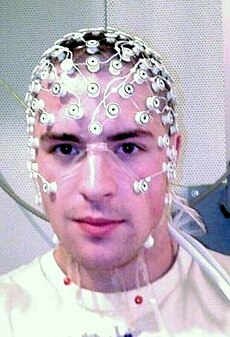
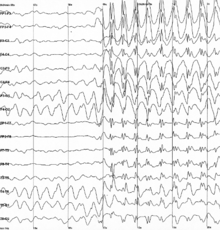
Electroencephalography (EEG) is the recording of electrical activity along the scalp. EEG measures voltage fluctuations resulting from ionic current flows within the neurons of the brain.[2] In clinical contexts, EEG refers to the recording of the brain's spontaneous electrical activity over a short period of time, usually 20–40 minutes, as recorded from multiple electrodes placed on the scalp. In neurology, the main diagnostic application of EEG is in the case of epilepsy, as epileptic activity can create clear abnormalities on a standard EEG study.[3] A secondary clinical use of EEG is in the diagnosis of coma, encephalopathies, and brain death. EEG used to be a first-line method for the diagnosis of tumors, stroke and other focal brain disorders, but this use has decreased with the advent of anatomical imaging techniques with high (<1 mm) spatial resolution such as MRI and CT. Despite limited spatial resolution, EEG continues to be a valuable tool for research and diagnosis, especially when millisecond-range temporal resolution (not possible with CT or MRI) is required. Derivatives of the EEG technique include evoked potentials (EP), which involves averaging the EEG activity time-locked to the presentation of a stimulus of some sort (visual, somatosensory, or auditory). Event-related potentials (ERPs) refer to averaged EEG responses that are time-locked to more complex processing of stimuli; this technique is used in cognitive science, cognitive psychology, and psychophysiological

Source of EEG activity

The brain's electrical charge is maintained by billions of neurons. Neurons are electrically charged (or "polarized") by membrane transport proteins that pump ions across their membranes. Neurons are constantly exchanging ions with the extracellular milieu, for example to maintain resting potential and to propagate action potentials. Ions of like charge repel each other, and when many ions are pushed out of many neurons at the same time, they can push their neighbors, who push their neighbors, and so on, in a wave. This process is known as volume conduction. When the wave of ions reaches the electrodes on the scalp, they can push or pull electrons on the metal on the electrodes. Since metal conducts the push and pull of electrons easily, the difference in push, or voltage, between any two electrodes can be measured by a voltmeter. Recording these voltages over time gives us the EEG.[4]
The electric potentials generated by single neurons are far too small to be picked by EEG or MEG.[5] EEG activity therefore always reflects the summation of the synchronous activity of thousands or millions of neurons that have similar spatial orientation. If the cells do not have similar spatial orientation, their ions do not line up and create waves to be detected.Pyramidal neurons of the cortex are thought to produce most EEG signal because they are well-aligned and fire together. Because voltage fields fall off with the square of the distance, activity from deep sources is more difficult to detect than currents near the skull.[6]
Scalp EEG activity shows oscillations at a variety of frequencies. Several of these oscillations have characteristic frequency ranges, spatial distributions and are associated with different states of brain functioning (e.g., waking and the various sleep stages). These oscillations represent synchronized activity over a network of neurons. The neuronal networks underlying some of these oscillations are understood (e.g., the thalamocortical resonance underlying sleep spindles), while many others are not (e.g., the system that generates the posterior basic rhythm). Research that measures both EEG and neuron spiking finds the relationship between the two is complex with the power of surface EEG only in two bands that of gamma anddelta relating to neuron spike activity.[7]


The Way of study

I be

lieve the traditional methods of study is not efficient.so please kindly read the posts from this blog http://wayofstudent.blogspot.com/ and practice the Creativity with My modern learning styles.
And finally become a GENIUS.

Brain-storming

Brainstorming is a group creativity technique by which a group tries to find a solution for a specific problem by gathering a list of ideas spontaneously contributed by its members. The term was popularized by Alex Faickney Osborn in 1953 through the book Applied Imagination. In the book, Osborn not only proposed the brainstorming method but also established effective rules for hosting brainstorming sessions.
Brainstorming has become a popular group technique and has aroused attention in academia. Multiple studies have been conducted to test Osborn’s postulation that brainstorming is more effective than individuals working alone in generating ideas . Some researchers have concluded that the statement is false (brainstorming is not effective), while others uncovered flaws in the research and determined that the results are inconclusive. Furthermore, researchers have made modifications or proposed variations of brainstorming in an attempt to improve the productivity of brainstorming. However, there is no empirical evidence to indicate that any variation is more effective than the original technique.

Neurobics

Neurobics are mental exercises, brain teasers and puzzles that purport to enhance the brain's performance,[1] although it's too early for any scientific evidence to support this idea.[1][2] The term neurobics was coined by late neurobiologist Lawrence Katz and Manning Rubin to describe mental exercises designed to keep the brain alert.[3] The term was popularized by Lawrence Katz as early as 1999.[4] It is presumed that unusual sensory stimulation and activities like non-routine actions and thoughts, produce more of such chemicals of the neurobiology system of body that encourage growth of new dendrites and neurons in the brain. Routine actions become so automatic to the individual that most of actions are done largely unconsciously. Such automated or unconscious actions require less activity in the brain, and exercise it less. With the help of neurobics exercises, it is claimed that one can stimulate the brain. An example of a neurobic exercise is to carry out a routine action such as dialing a phone number or brushing your teeth with your non-dominant hand.[4] Other neurobilogists suggest that neurobics can slow aging of the brain.[5]

Aromatherapy


Aromatherapy is a form of alternative medicine that uses volatile plant materials, known as essential oils, and other aromatic compounds for the purpose of altering a person's mind, mood, cognitive function or health.
Some essential oils such as tea tree[1] have demonstrated anti-microbial effects, but there is still a lack of clinical evidence demonstrating efficacy against bacterial, fungal, or viral infections. Evidence for the efficacy of aromatherapy in treating medical conditions remains poor, with a particular lack of studies employing rigorous methodology,[2] however some evidence exists that essential oils may have therapeutic potential.[3]


The brain is the center of the nervous system in all vertebrate and most invertebrate animals. Some primitive animals such as jellyfish and starfish have a decentralized nervous system without a brain, while sponges lack any nervous system at all. In vertebrates, the brain is located in the head, protected by the skull and close to the primary sensory apparatus of vision, hearing, balance, taste, and smell.
Brains can be extremely complex. The cerebral cortex of the human brain contains roughly 15–33 billion neurons, perhaps more, depending on gender and age, linked with up to 10,000 synaptic connections each. Each cubic millimeter of the cerebral cortex contains roughly one billion synapses.[3] These neurons communicate with one another by means of long protoplasmic fibers called axons, which carry trains of signal pulses called action potentials to distant parts of the brain or body and target them to specific recipient cells.
The brain controls the other organ systems of the body, either by activating muscles or by causing secretion of chemicals such as hormones and neurotransmitters. This centralized control allows rapid and coordinated responses to changes in the environment. Some basic types of responsiveness are possible without a brain: even single-celled organisms may be capable of extracting information from the environment and acting in response to it. Sponges, which lack a central nervous system, are capable of coordinated body contractions and even locomotion.In vertebrates, the spinal cord by itself contains neural circuitry capable of generating reflex responses as well as simple motor patterns such as swimming or walking. However, sophisticated control of behavior based on complex sensory input requires the information-integrating capabilities of a centralized brain.
Despite rapid scientific progress, much about how brains work remains a mystery. The operations of individual neurons and synapses are now understood in considerable detail, but the way they cooperate in ensembles of thousands or millions has been very difficult to decipher. Methods of observation such as EEG recording and functional brain imaging tell us that brain operations are highly organized, while single unit recording can resolve the activity of single neurons, but how individual cells cause complex operations is unknown.

Ambidexterity


is the state of being equally adept in the use of both left and right appendages (such as the hands). It is one of the most famous varieties of cross-dominance. People that are naturally ambidextrous are rare, with only one out of one hundred people being naturally ambidextrous.[1] The degree of versatility with each hand is generally the qualitative factor in determining a person's ambidexterity.

Friday, April 29, 2011

Mind

Mind is the aspect of intellect and consci

ousness experienced as combinations of thought, perception, memory, emotion, will, and imagination, including all unconscious cognitive processes. The term is often used to refer, by implication, to the thought processes of reason. Mind manifests itself subjectively as a stream of consciousness, or intersubjectively through conversation.

Theories of mind and its function are numerous. Earliest recorded speculations are from the likes of Zoroaster, the Buddha, Plato, Aristotle, and other ancient Greek, Indian and, later, Islamic and medieval European philosophers. Pre-modern understandings of the mind, such as the neoplatonic "nous" saw it as an aspect of the soul, in the sense of being both divine and immortal, linking human thinking with the un-changing ordering principle of the cosmos itself.

Which attributes make up the mind is much debated. Some psychologists argue that only the "higher" intellectual functions constitute mind, particularly reason and memory. In this view the emotions—love, hate, fear, joy—are more primitive or subjective in nature and should be seen as different from the mind as such. Others argue that various rational and emotional states cannot be so separated, that they are of the same nature and origin, and should therefore be considered all part of what we call the mind.

In popular usage mind is frequently synonymous with thought: the private conversation with ourselves that we carry on "inside our heads." Thus we "make up our minds," "change our minds" or are "of two minds" about something. One of the key attributes of the mind in this sense is that it is a private sphere to which no one but the owner has access. No one else can "know our mind." They can only interpret what we consciously or unconsciously communicate.